
QUICK ANSWER
Google treats finance as YMYL, so for a UAE bank or fintech, trust decides visibility: named expert authors, content that mirrors your Central Bank of the UAE (CBUAE) disclosures, and clean technical security. Then make your rates, fees and eligibility rules easy for AI systems to read as plain, current HTML. Schema helps clarity, but no markup guarantees ChatGPT or AI Overviews quote your live numbers.
Most UAE banks publish generic financial blogs with no author bios, then wonder why Google's systems rank comparison sites above them. I've sat in those meetings, and the problem is rarely keywords. It's that nobody can answer two questions: who wrote this, and who checked it? For a Dubai-based bank or fintech, that gap decides whether your product pages can compete with the aggregators at all.
Money topics sit in the category Google calls YMYL, or Your Money or Your Life, where its systems give extra weight to content that shows strong E-E-A-T. In practice that means more than good writing. Authorship, regulatory disclosure, accurate numbers and secure infrastructure all have to line up, and they cut across marketing, legal, product and engineering. It's as much a technical SEO and governance problem as a content one.
Here's what I see when I audit a bank's organic presence. The product pages are polished, the rates sit in a PDF, the blog posts carry no names, the Arabic pages are a lighter copy of the English ones, and the login portal is quietly being crawled. Each of those is a small trust leak. Together they hand the SERP to whoever looks more accountable. Fixing it rarely needs a rebuild. It needs the SEO, legal, product and engineering teams to agree on who owns what, and that's where I start.

The 2026 UAE Financial Search Landscape: Zero-Click Banking and Neo-Bank Threats
Scale first. The CBUAE reported total banking-sector assets of AED 5.56 trillion at the end of Q1 2026, a figure quoted in YouGov's 2026 UAE bank rankings. In the same YouGov BrandIndex data (August 2025 to July 2026), Emirates NBD led consideration at 29.2%, followed by ADCB at 24.2% and FAB at 22.0%. Dubai Islamic Bank (18.2%) and ADIB (18.1%) sat fourth and fifth. Two Islamic banks in the top five tells you Sharia-compliant search is mainstream, not a niche.
Growth is coming from challengers too. The biggest consideration gains year on year went to FAB (+1.1 points), RAK BANK, Mashreq and Wio (+0.8 each), and Mashreq Neo (+0.4). Small numbers, but they show the field is moving, and organic search is where high-lifetime-value customers compare options. In the SERPs I review, comparison sites such as YallaCompare and Souqalmal often sit above bank product pages, because they show clear tables, fast updates and named editors. A bank that matches those basics, with its own authoritative data, has an edge they can't copy.
Then there's the zero-click shift. Shoppers no longer read five blog posts to understand a Murabaha car loan. They ask an AI system for the best Islamic credit card in Dubai with no annual fee. Google says AI Mode has passed 1 billion monthly users, and its own guide to generative AI features says original, first-hand, expert content matters most. Our write-up on getting cited in AI Overviews and ChatGPT covers the retrieval side.
Regulation is part of the landscape, not a separate topic. Navigating CBUAE compliance while running an aggressive organic strategy is why a specialized SEO agency in UAE is useful for financial institutions: the work sits between marketing, legal and engineering. Be precise about what Google says, though. It states that E-E-A-T isn't a specific ranking factor, that trust is the most important part, and that its systems give more weight to strong E-E-A-T on topics like financial stability. Compliance doesn't rank pages by itself. It makes your content trustworthy to people, and that's what the systems try to reward.
Summary Table: 8-Phase YMYL SEO Execution Plan
| Phase | Technical execution | Owner | KPI to watch |
|---|---|---|---|
| 1. Author entities | Named expert bylines, reviewer credits, author hubs, Person schema | SEO, content, HR | Pages with named author and reviewer |
| 2. Content governance | Review workflow, bilingual disclosures as HTML, update dates | Legal, compliance, SEO | Pages approved vs. published |
| 3. Financial schema | Product data generated from the rates system | Dev, product | Schema vs. visible rate mismatches |
| 4. AEO formatting | Answer-first pages, rate tables, indexable calculators | SEO, content | AI answer accuracy checks |
| 5. Bilingual intent | Native Arabic pages, hreflang, Islamic finance terms | SEO, Arabic editors | Arabic impressions and clicks |
| 6. Branch SEO | Bulk profiles, consistent name, address, phone and hours | Marketing, branch ops | Direction and call actions |
| 7. Security and CWV | HTTPS, login URLs excluded, lean templates | Dev, security | CWV by template, indexed login URLs |
| 8. Digital PR | Expert commentary in credible UAE outlets | Comms, SEO | Quality mentions and links |
Essential YMYL SEO Guidelines for UAE Banks and Financial Institutions
1. Building Author Entity Architecture (Proving E-E-A-T)
"By Admin" is a trust failure. Google's guidance asks whether bylines lead to further information about the author, so give every guide a named author and a named reviewer. For a mortgage article that means a mortgage specialist who wrote it and a compliance reviewer who approved it, each with a bio page.
- Build an author hub per expert (chief economist, wealth manager, Sharia scholar) with role, credentials, years of experience, topics and links to their LinkedIn profile and published work.
- Mark them up with Person schema, link it to the Organization entity, and keep names, titles and photos identical everywhere. Google documents Article and profile page markup for this.
- Add visible "reviewed by" and "last reviewed" lines, plus an editorial policy page explaining how content is checked.
Define who qualifies. A byline can go to the specialist who actually works in the area, while the reviewer should be someone with the authority to approve claims, such as a product head, a compliance officer or a Sharia reviewer. Each bio should state what they do, how long they've done it and what they're qualified to comment on. Don't invent credentials or recycle stock bios across pages.
The question I ask on every audit is simple: if a customer asked who stands behind this page, could we answer in ten seconds? If nobody can, neither can Google. Real authority comes from actual experts. Our own author page follows this pattern: a named person, a role and a body of work.

2. Content Governance and CBUAE Regulatory Alignment
The friction between SEO and Legal is real, and I've never won it by arguing about rankings. What works is showing that the legal wording stays identical and only the structure changes. Start from the rules. The CBUAE's Consumer Protection Standards require clear, plain-language disclosure in Arabic and English, advertisements that are accurate and not misleading, and advertised APRs labelled as annual percentage rates and inclusive of fees. A Key Facts Statement should be the first document provided in the sales process, and Islamic institutions must disclose the Sharia basis of a product and its approval from their internal Sharia supervision committee.
The wider law has moved too. Under Federal Decree-Law No. 6 of 2025, effective 16 September 2025, advertising a licensable financial activity is itself a licensed activity, with a one-year transition period that the CBUAE can extend. That makes marketing content a compliance object. I'm not a lawyer, so treat this as context and confirm details with your legal team.
- Publish the Key Facts Statement, fees schedule, warnings and Sharia approval as crawlable HTML on the product page, not only as a PDF or image, with the PDF as a download.
- Use bold highlight boxes for required warnings, and collapsible sections for long terms, so mobile pages stay usable without hiding mandatory text.
- Show your CBUAE licence reference and regulator link in the footer and on About pages, and keep them consistent across languages.
- Put "last reviewed" dates and a version history on rates and terms, and route every change through one approval workflow.
Build the workflow into templates. Pre-approve the components that repeat, such as warning boxes, fee tables and licence statements, so individual pages only need review for what's new. Agree a review turnaround with legal, assign one owner per product, and keep a change log. In my experience, compliance teams slow down when every page feels like a new risk, and speed up when most of it is a known, approved pattern.
The first YMYL recovery I'd attempt for a bank starts here: visible authorship, an editorial policy, current disclosures and a clean review trail. I've seen that combination do more than any keyword rewrite.
3. Advanced Structured Data (FinancialProduct and Islamic Finance Schema)
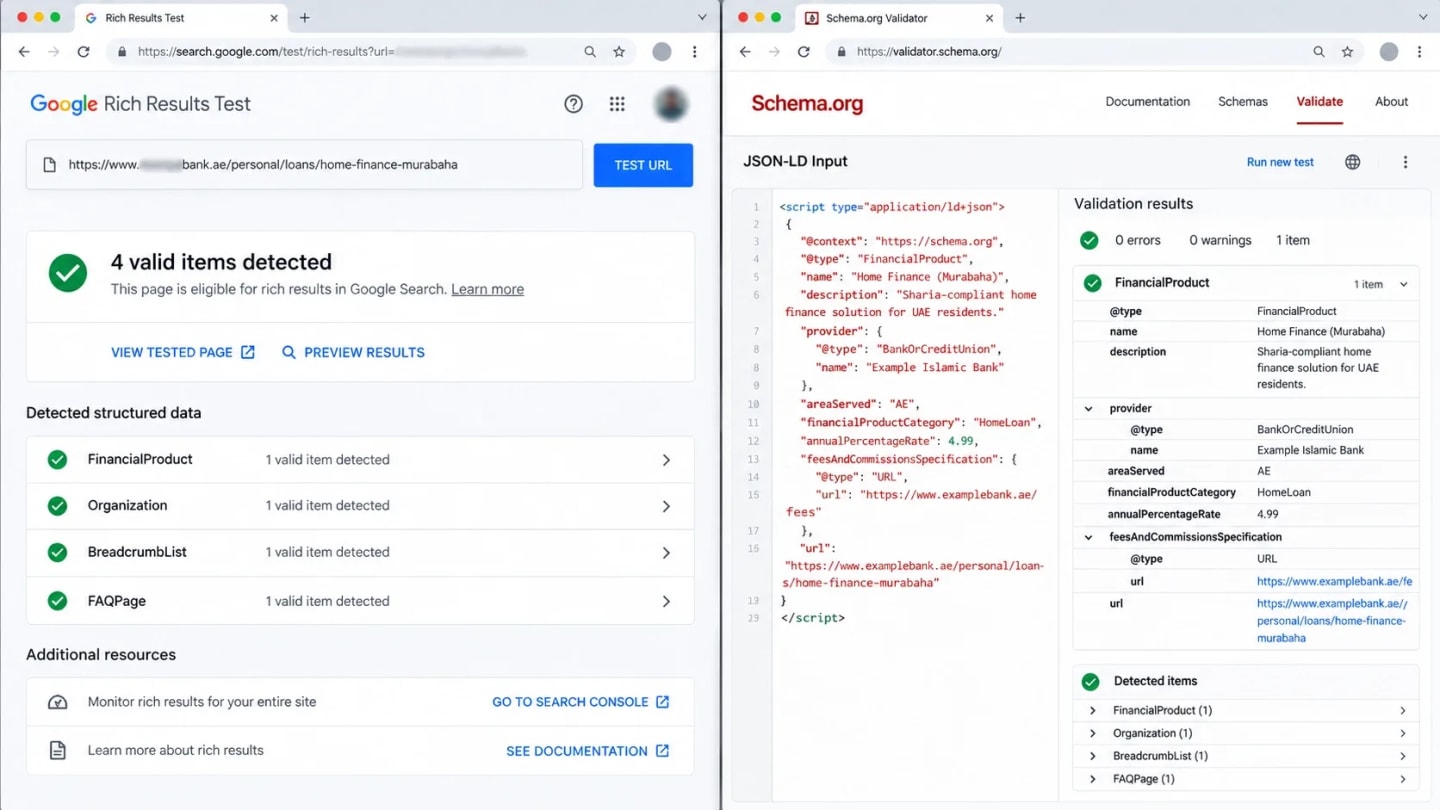
Be clear on one point before you build. Google's supported structured data gallery doesn't list FinancialProduct or BankOrCreditUnion, and Google's AI guide says no special schema is required for generative AI features. So treat these types as precise vocabulary that other systems may read, never as a switch that makes AI quote your rates. Use the Organization, Article, Profile page and Breadcrumb types Google does support first.
Where you do use schema.org's financial vocabulary, generate it from the same rates system that feeds the page, with provider, product, APR, fees and area served. Here's how I'd structure a Sharia-compliant financing product:
{
  "@context": "https://schema.org",
  "@type": "FinancialProduct",
  "name": "Home Finance (Murabaha)",
  "provider": {
    "@type": "BankOrCreditUnion",
    "name": "Example Islamic Bank"
  },
  "areaServed": "AE",
  "annualPercentageRate": 4.99,
  "feesAndCommissionsSpecification": "https://example.com/ae-en/fees",
  "url": "https://example.com/ae-en/home-finance/murabaha"
}
Add Organization markup too, with the bank's legal name, logo, official profiles in sameAs and a link to the regulator's licensing information where it exists. Every value must match the visible page and the disclosed terms. Wrong markup on a regulated product is worse than none. Add a "starting from" or "indicative" label where the real rate depends on the customer, and pull values from the system of record so web, app and branches agree.
4. Answer Engine Optimization (AEO) for Financial LLM Queries
Take a question like "What is the minimum salary for a mortgage in Dubai?" The best page answers it in the first two sentences, then adds a table of eligibility rules, a worked example and a short FAQ. If compliance forces your rates into an unreadable PDF, you've already lost the AI search battle. Keep numbers in HTML tables with an update date.
- Calculators: a JavaScript tool's output isn't readable text. Wrap it with plain explanation, a sample calculation (for example, a fixed loan amount, tenor and rate) and the formula in words.
- FAQ blocks: write real customer questions about eligibility, fees, early settlement and documents, answered in two or three sentences each.
- Source discipline: label what's indicative, name the effective date, and link to the full terms.
I've seen legal teams accept structured Q&A on loan pages once we showed that the wording was theirs and only the layout changed. That's the core of answer engine optimization for finance. A good answer block looks like this: a one-line answer ("Most UAE lenders look for a minimum monthly salary that varies by product and residency; ours is stated below"), then a table of salary, age, employment and document requirements, then the date reviewed. Test it monthly: ask AI tools your best customer questions, and check whether they quote correct, current numbers. If they don't, fix the source page.
5. Bilingual Search Intent (Mapping English and Arabic Financial Terms)
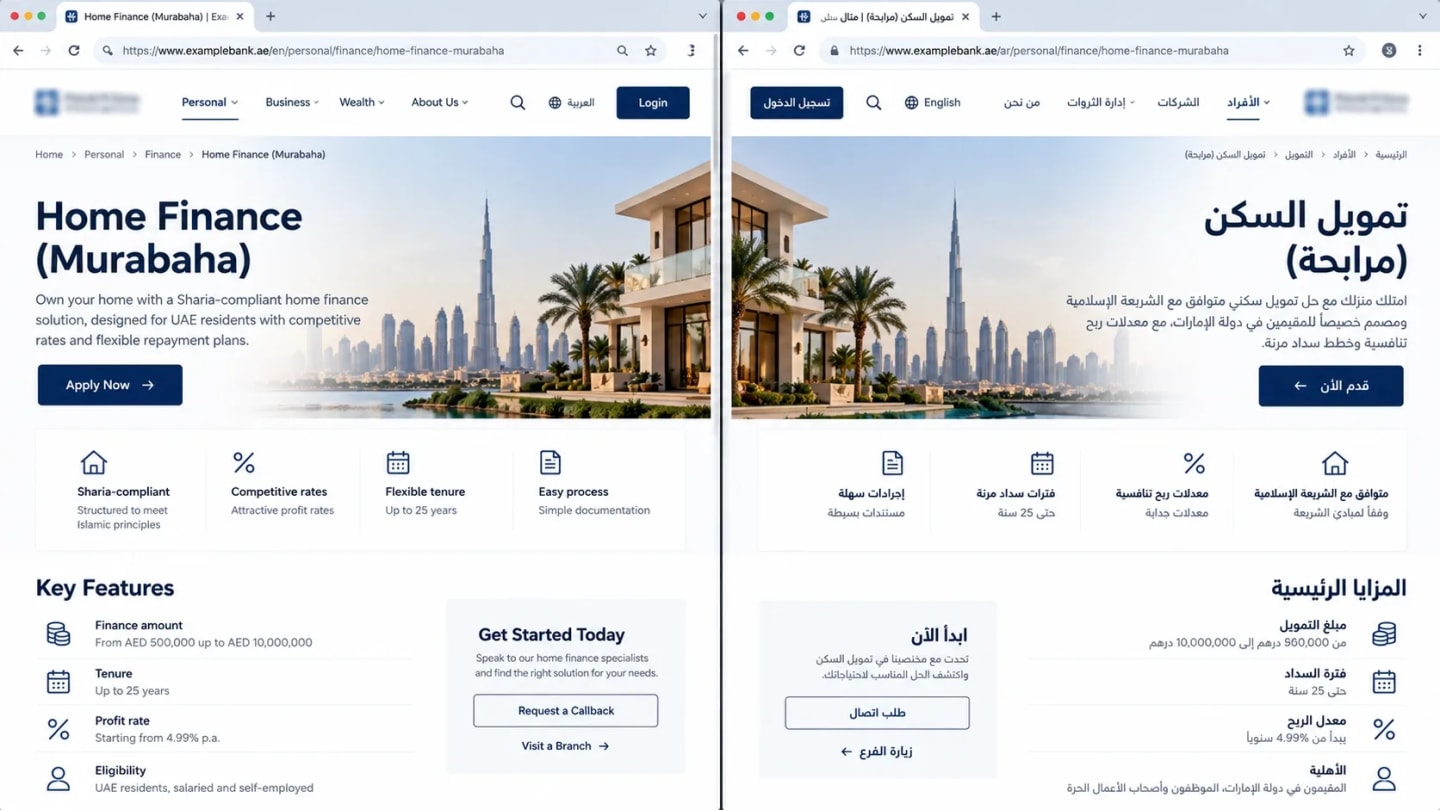
Behaviour differs. Western expats search "personal loan Dubai", while many Gulf nationals search for Islamic personal finance (تمويل شخصي إسلامي) or an Islamic credit card (بطاقة ائتمانية إسلامية). A term like Murabaha (مرابحة) carries meaning that an English page doesn't. Mixed searches exist too, so use real query data from Search Console, not assumptions.
Give each language its own URL with native copy, a self-referencing canonical and hreflang tags with language-region values (en-AE, ar-AE) that point at each other. A shared canonical across languages tells Google to drop one. Keep navigation, calculators, forms and disclosures at parity, so the Arabic page never shows older rates than the English one. Machine translation of financial terms is risky, because an inexact word can change the meaning of a product. Proper Arabic SEO means native financial editors, matched disclosures in both languages, and right-to-left testing of calculators, tables and forms.
6. Local SEO for Branches and ATMs (Geo-Grid Domination)
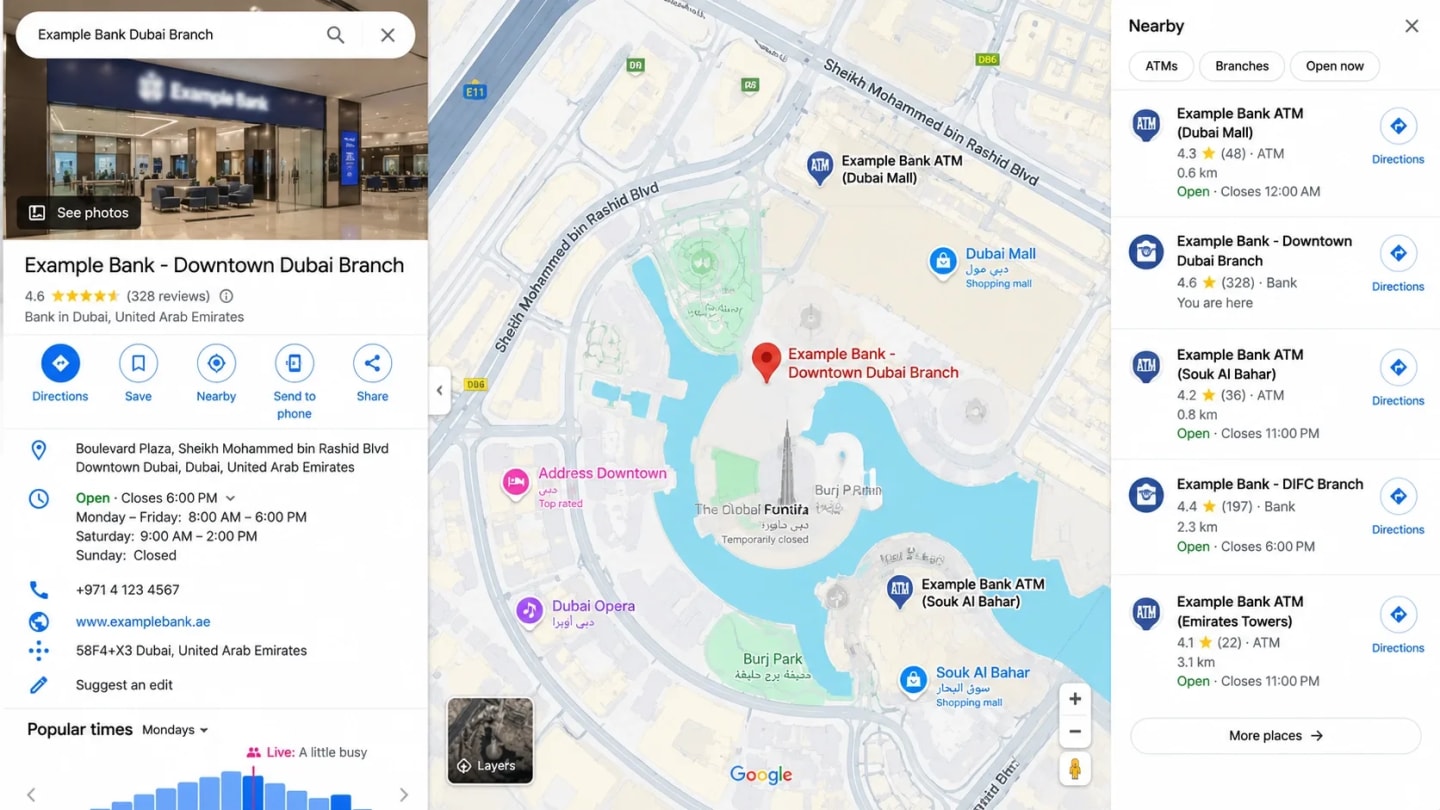
Banks have dozens of branches and ATMs, and each is a ranking opportunity for "ATM near me" and "branch open on Sunday". Google's guidelines say an ATM attached to a bank can use its own separate Business Profile with its own hours, and that business names should reflect the real-world name, with no taglines. So a bank branch profile should read "Bank Name", not "Bank Name, UAE's Best Mortgages".
- Manage profiles in bulk, with one owner group and strict naming, address and phone formats, plus a website link to the matching branch page.
- Use correct hours for each profile, including weekend, Ramadan and holiday changes, and audit suggested edits regularly.
- Create unique branch pages with services, map, parking and accessibility details, linked to the right profile.
Track visibility with geo-grids around key branches, not one citywide rank. Our Google Business Profile guide for Dubai covers the process in detail.
7. Core Web Vitals, Enterprise Security, and Portal Architecture
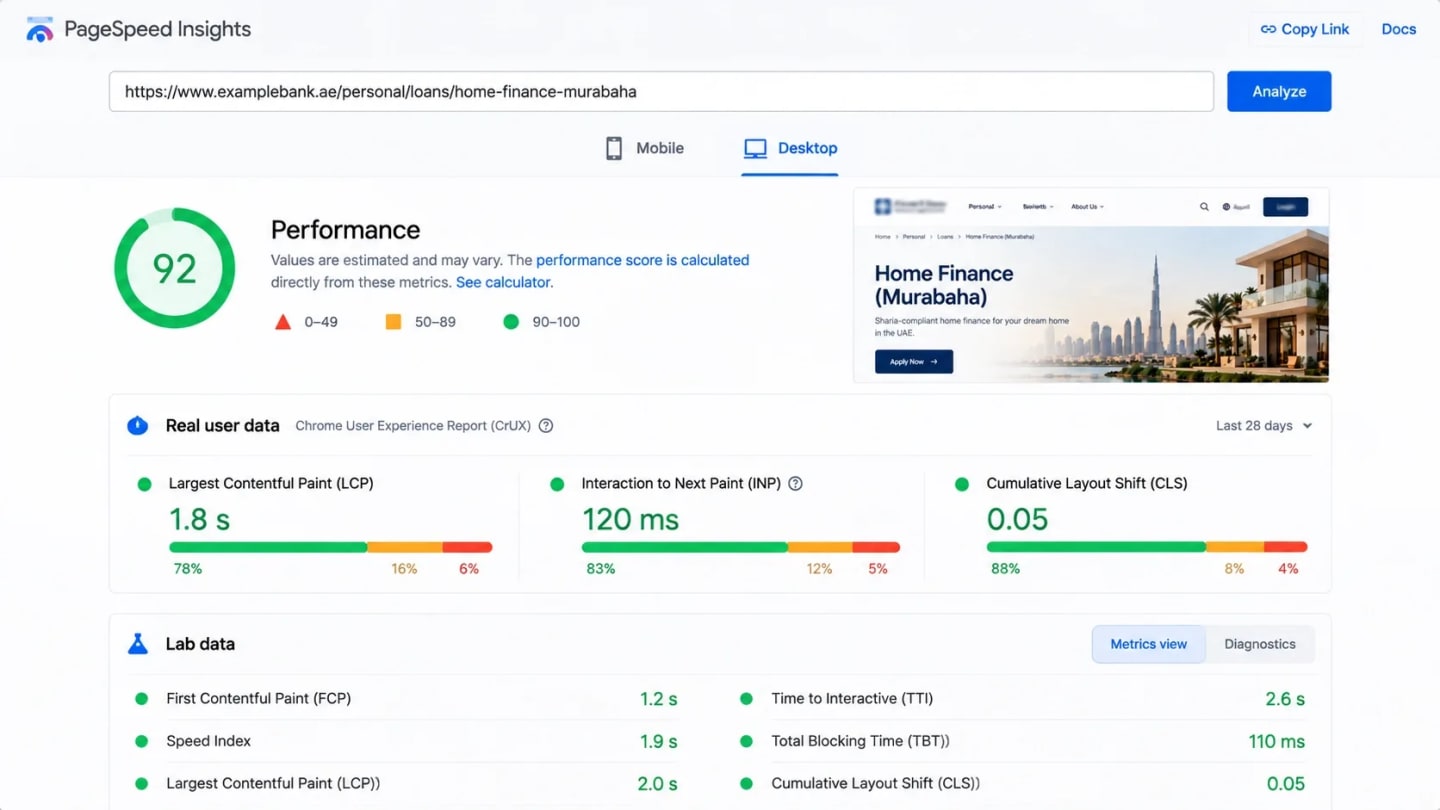
Security is part of trust, so enforce HTTPS everywhere, use modern TLS and send standard security headers. Customer portals need another layer. Login, account and application URLs shouldn't be indexed or eat crawl budget. Keep them out of sitemaps, return noindex through headers on pages crawlers can reach, and remember that a page blocked by robots.txt can't have its noindex read.
Heavy enterprise stacks like Sitecore or Adobe Experience Manager often ship large JavaScript bundles. Fix Core Web Vitals by template: LCP for product pages, INP for calculators and application forms, CLS for consent bars and rate banners. Add HSTS and a content security policy, test the cookie-consent banner for layout shift, and defer third-party scripts, compress images, and cache public pages at the edge while never caching personalised data. Our enterprise technical SEO checklist covers the crawl and caching side, and regular audits keep it from regressing.
8. Digital PR and Off-Page Trust Signals in the GCC
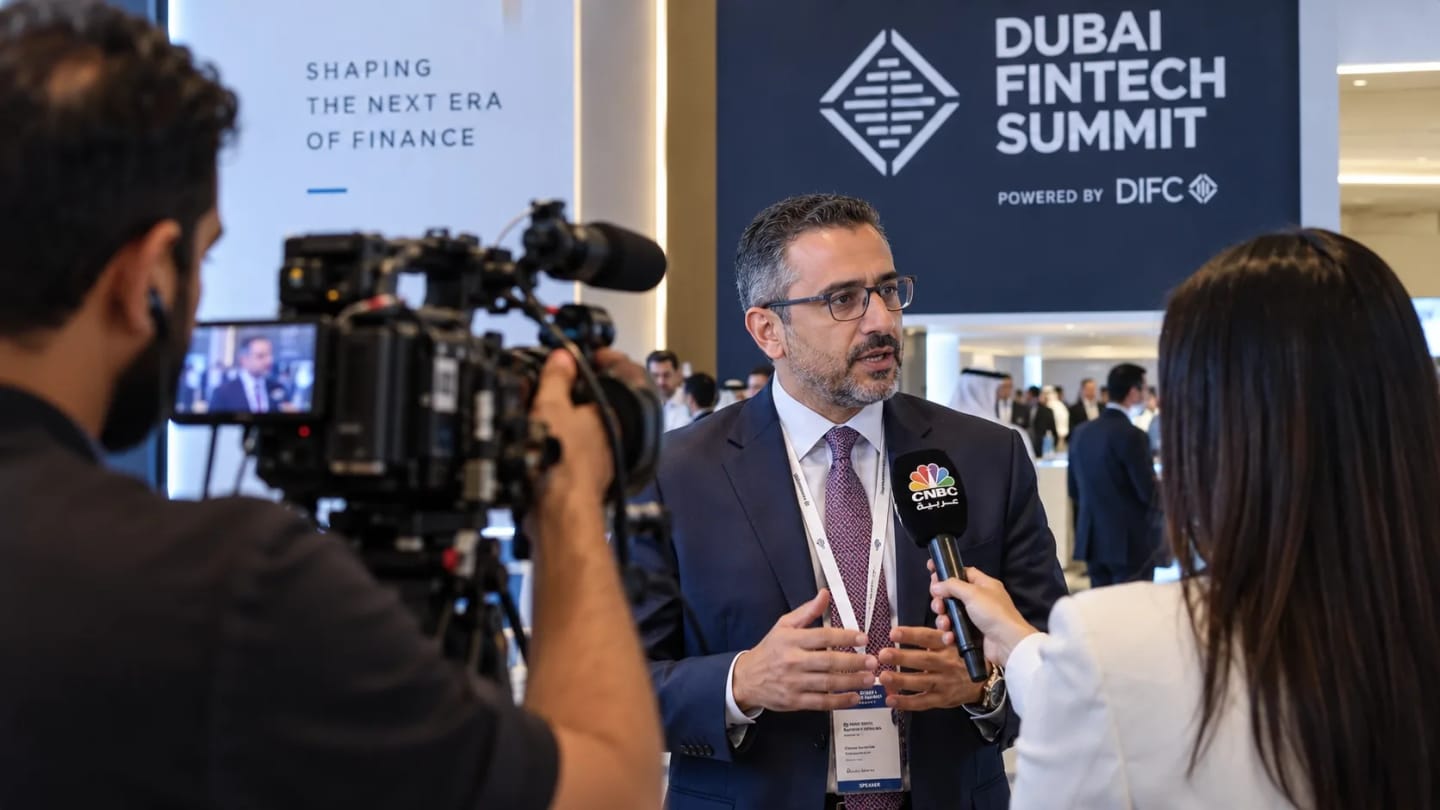
E-E-A-T needs outside validation. Credible mentions from respected UAE publications, financial commentary quoted by journalists and references on official or industry sites all show that real people trust you. Unlinked brand mentions pass no link, but they can still reinforce that real people recognise the brand.
- Offer your named experts for comment on rate decisions, property trends and regulation changes, with data you can defend.
- Publish original research, such as an annual customer survey, and share the methodology.
- Monitor reviews and reputation signals, and respond professionally, since online reputation management matters more when money is involved.
Plan it as a rolling programme: a quarterly research release, monthly expert commentary and a prepared response for market news. When a journalist needs a quote on a rate change, the bank with a named, credentialed spokesperson gets called first.
One caution: buying links or placing paid articles without disclosure is a short road to trouble in a regulated industry. Earn it, document it, and keep it relevant.
The "Old Banking SEO" Habits You Must Drop Immediately
- Publishing under "Admin." Anonymous finance content is the easiest YMYL page to ignore.
- Hiding rates and fees in PDFs. Customers, regulators and AI systems all prefer readable HTML.
- Treating compliance as a final-stage veto. Bring legal in at the brief, not the publish button.
- Copying English pages into Arabic. Native intent and Sharia terms need real editors.
- Letting login and portal URLs get indexed. That wastes crawl budget and exposes pages that were never meant for search.
- Chasing schema as a magic fix. Accurate, current visible content comes first.
- Ignoring branch profiles. Local intent drives walk-ins and calls.
Frequently Asked Questions
What does YMYL mean for banks operating in the UAE?
YMYL means "Your Money or Your Life", Google's label for topics that can affect financial stability. Its systems give more weight to content with strong E-E-A-T there, so banks need expert authorship, accuracy and transparent terms.
How does Google measure E-E-A-T for financial institutions?
It doesn't use a single E-E-A-T score. Google says E-E-A-T isn't a specific ranking factor, and its systems use many signals to identify helpful, trustworthy content, with trust as the most important element.
Do I need an actual financial expert to write our bank's SEO content?
Yes, or at least an expert reviewer. SEO writers can structure and edit, but a named specialist and a compliance reviewer give the page real credibility.
How do I optimize Sharia-compliant banking products for organic search?
Use the language customers search, such as Murabaha (مرابحة) and Islamic finance (تمويل إسلامي), explain the structure plainly and disclose the Sharia basis and approval on the page. Keep Arabic and English versions consistent with hreflang.
How can our bank rank our mortgage calculators in Google AI Overviews?
Surround the calculator with crawlable text, a worked example and an FAQ. No format guarantees inclusion, but accurate, readable numbers give AI systems something to quote.
Should we create separate Google Business Profiles for our ATMs and our main branches?
Google's guidelines allow a bank's ATM to have its own profile and hours. Use a clear naming pattern and avoid duplicates for the same location.
Why is my bank losing organic traffic to aggregator sites like YallaCompare?
Comparison sites present many products in one place, with clear tables and fast updates. Match that with readable rate tables, expert-reviewed guides and strong product pages.
How does CBUAE compliance impact a bank's SEO performance?
Compliance doesn't rank pages directly, but it shapes content quality. Clear disclosures, accurate ads and Sharia information build the trust Google and customers look for, while errors damage both.
More articles you might like
 Local SEO
 Kashaf Khan
Eid Al Etihad Google Business Profile Checklist
Set Eid Al Etihad special hours, Offer posts and festive photos on your Google Business Profile before 2 December, without post rejections or suspensions.
 AEOKashaf Khan
AEO in the UAE: How to Get Your Business Cited by AI
Learn how UAE businesses get cited by ChatGPT, Google AI Overviews and Perplexity: entity setup, Arabic AEO, schema, AI crawler rules and tracking.
 SEOKashaf Khan
11 SEO Tips To Prepare Your Store For White Friday 2026
Prepare your store for White Friday 2026 with 11 SEO tips to boost rankings, attract shoppers, and increase sales.